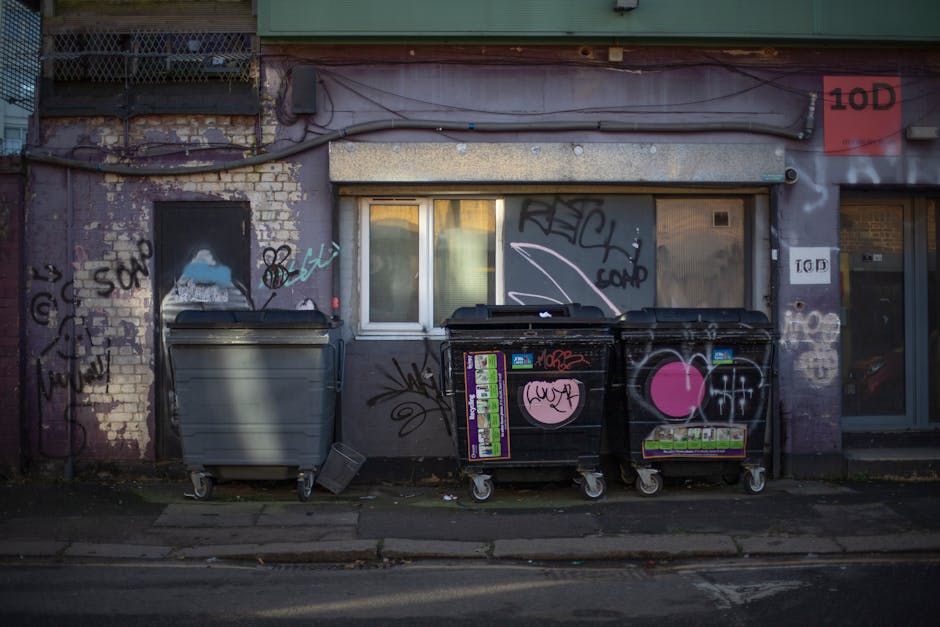
Limehouse office rubbish collection for small businesses
If you run a small business in Limehouse, office rubbish has a funny habit of building up quietly. One day it is a few cardboard boxes and a broken chair; a week later, the spare corner by the kettle looks like a storage room nobody asked for. Limehouse office rubbish collection for small businesses is really about keeping that chaos under control without wasting time, space, or money. In this guide, we will walk through how it works, what it costs in practical terms, where the common problems hide, and how to choose a collection approach that fits a compact business in E14.
Whether you manage a start-up workspace, a shared office, a small studio, or a back-office operation tucked above street level, the right rubbish collection setup can make the day run smoother. It is not glamorous, but it is one of those behind-the-scenes jobs that keeps everything else moving.
Table of Contents
- Why Limehouse office rubbish collection for small businesses matters
- How Limehouse office rubbish collection for small businesses works
- Key benefits and practical advantages
- Who this is for and when it makes sense
- Step-by-step guidance
- Expert tips for better results
- Common mistakes to avoid
- Tools, resources and recommendations
- Law, compliance, standards, or best practice
- Options, methods, or comparison table
- Case study or real-world example
- Practical checklist
- Conclusion
- Frequently asked questions
Why Limehouse office rubbish collection for small businesses Matters
Small offices in Limehouse often work with limited storage, tight access, and a lot of foot traffic. That combination makes rubbish collection more important than it first appears. A few overloaded bin bags by the door can create a fire risk, attract pests, or simply make a professional space feel scruffy. Nobody wants a client stepping past a pile of flattened packaging on the way to a meeting.
There is also the simple matter of time. Small businesses rarely have someone whose job is waste management. In reality, it lands on the office manager, the founder, or whoever is already doing three other jobs before lunch. Reliable collection means less internal juggling and fewer last-minute scrambles when the bins are full and the landlord is on the phone.
In Limehouse, the layout of buildings can make disposal awkward too. Narrow streets, limited loading space, and shared entrances often mean you need a collection plan that is quick, tidy, and not disruptive. That is where a proper office rubbish collection service earns its keep.
Practical takeaway: the best office waste setup is not the one with the biggest capacity. It is the one that keeps your workspace clear, your team unstressed, and your collection days predictable.
There is also a reputation angle. Clients, suppliers, and staff notice order. Even if they never mention it, a clean back office and a tidy exit area quietly signal that the business is organised. To be fair, that counts for a lot.
How Limehouse office rubbish collection for small businesses Works
Office rubbish collection is usually straightforward once you understand the moving parts. Most small businesses start by identifying what kind of waste they produce and how often it appears. That might include paper, cardboard, packaging, broken office furniture, redundant IT equipment, general rubbish, or confidential materials that need specialist handling.
From there, the process usually follows a few simple steps. First, a collection is arranged for a time that fits the business day. Then the waste is sorted, loaded, and taken away. Depending on the provider and the type of rubbish, items may be reused, recycled, or disposed of through an approved route. If the waste includes confidential or sensitive material, something like confidential shredding may be the better option than just putting documents in a general bin.
For small businesses, the most useful service is often one that is flexible. Maybe you only need a one-off clearance after an office move. Maybe you need recurring help because cardboard builds up every week from deliveries. Or maybe you are clearing out a storage cupboard that has somehow become a graveyard for old monitors and mystery cables. We have all seen that cupboard.
Some collections are linked to broader services such as office clearance or wider business waste removal. That can be useful if you are disposing of mixed items rather than just standard bin waste. The key is to match the service to the actual load, not the other way round.
Good providers will also think about access. In Limehouse, that matters. If loading is awkward or stairs are involved, the team should plan the route, estimate the lifting needed, and make sure the collection can be done without blocking staff or customers. A smooth job usually looks boring from the outside, which is exactly what you want.
Key Benefits and Practical Advantages
The most obvious benefit is space. Small businesses feel clutter fast. A cleared office gives you more room for staff, filing, stock, equipment, or simply a desk that is not buried under delivery boxes. There is a mental benefit too. A clear environment tends to feel calmer, even if the coffee machine still sounds like a tractor at 8:45 on a Monday.
Another major benefit is efficiency. Once rubbish collection is organised properly, staff spend less time carrying bags to unsuitable bins, rearranging storage, or wondering who should deal with the pile by the printer. That little bit of friction disappears. And when work is already busy, removing friction matters more than people admit.
You also reduce the risk of over-accumulation. Waste left too long can spill into walkways, block fire exits, or create awkward smells in warm weather. In an office with customers coming and going, that is not a small thing. A consistent collection schedule helps you stay ahead of it.
There is a financial side as well. Surprisingly, many small businesses save money by choosing the right service rather than doing ad hoc one-offs every time the place gets messy. Planned collection can be easier to budget for, and it often avoids the hidden cost of staff time spent sorting a problem that should have been handled externally.
Finally, there is a sustainability angle. Mixed waste handled carelessly is one thing; waste separated sensibly is another. If your office produces lots of cardboard, paper, or redundant packaging, a service with strong recycling habits can make a real difference. If you already think about sustainability in the business, this is an easy place to put that into practice. Not fancy. Just useful.
Who This Is For and When It Makes Sense
Limehouse office rubbish collection for small businesses makes sense for any business that produces more waste than it can comfortably manage in-house. That includes start-ups in shared office buildings, agencies in compact workspaces, accountants, design studios, consultancies, remote-team hubs, and small administrative offices.
It is especially relevant if:
- your office has limited storage for waste
- you receive regular deliveries with lots of cardboard
- you are moving, downsizing, or renovating
- you store old furniture, files, or equipment that needs clearing
- your staff are spending too much time dealing with rubbish
- you need discreet handling of sensitive paperwork or data-bearing items
- the building access makes ordinary disposal awkward
It also makes sense when your internal bin system is technically working, but only just. That is the point where waste starts becoming a disruption rather than a background task. You know the feeling: one week is fine, the next week the bags are stacking up and everyone starts pretending they did not notice.
If your business is in a serviced office or multi-tenant building, you may also need to respect building rules about where items can be placed and when collections can happen. In those settings, the right external collection can be less about convenience and more about keeping everybody on the same page.
Step-by-Step Guidance
If you want to get office rubbish collection right the first time, work through it in a simple order. No drama. Just a few sensible decisions.
- Identify the waste types. List what you actually throw away. General rubbish, paper, cardboard, furniture, IT items, confidential documents, and any unusual waste should all be noted separately.
- Estimate volume and frequency. Think about how much waste you produce in a normal week. A quiet two-person office and a busy ten-person team will need very different arrangements.
- Check access. Look at doors, stairs, parking, lift access, loading restrictions, and whether anything needs to be moved through communal areas. Limehouse buildings can be wonderfully varied, which is a polite way of saying access is sometimes a headache.
- Decide between one-off or recurring collection. A one-off clearance suits moves and deep cleans. Regular collection suits ongoing waste pressure, especially from packaging or office churn.
- Separate special items. Keep confidential paperwork, electronic waste, and any items requiring extra care apart from general rubbish. That reduces confusion on the day.
- Request a clear quote. Ask what is included, what is extra, and how pricing changes for lifting, sorting, or heavy items. If you want to understand costs better, the provider's pricing and quotes page can help you see how estimates are usually handled.
- Set a collection window. Choose a time that does not disrupt client meetings or peak office activity. Early mornings often work well, but every business is a little different.
- Prepare the waste neatly. Bag or stack items where requested. Fold cardboard. Make sure access paths are clear. This sounds obvious, but the smoothest collections usually happen when the waste is already organised.
- Review after the first collection. Ask what worked and what did not. Was the timing right? Was the amount accurate? Did anything need special handling? A small tweak now saves hassle later.
That last step gets missed more often than it should. A five-minute review can improve the next collection quite a bit. Small thing, big effect.
Expert Tips for Better Results
If you want office rubbish collection to run well over time, treat it as a small system, not an emergency response. The best offices do not wait until the bins are overflowing. They create habits that stop waste from becoming a scene.
First, separate cardboard early. In small businesses, packaging waste is often the quickest thing to grow. Break boxes down as they arrive. It frees space instantly and makes collection easier later.
Second, give waste a home. If rubbish has no obvious place to go, it ends up wherever somebody puts it. That is how piles start. One labelled area, even a modest one, can make a surprising difference.
Third, keep confidential items out of general waste. People sometimes assume a desk drawer is private enough. It is not. If documents include client details, financial information, or staff records, use a proper shredding route rather than hoping for the best.
Fourth, ask about recycling. A good collection plan should not be limited to disposal. If cardboard, office paper, or clean packaging can be diverted, you reduce the amount going into mixed waste. That is better for the environment and often neater operationally too.
Fifth, photograph problem items before collection if needed. For unusual furniture, electronics, or mixed office clutter, a quick photo can prevent misunderstandings about volume or handling. Nothing fancy. Just practical.
Sixth, schedule around your real week. If Tuesdays are client-heavy and Fridays are admin-light, plan accordingly. The obvious slot is not always the best slot.
One small human tip: assign one person to own the waste process. Not to do all the lifting, just to keep an eye on it. Without that, waste tends to become everyone's job, which in practice means nobody's.
Common Mistakes to Avoid
Most office waste problems do not come from huge failures. They come from tiny assumptions that never got checked. A few of the common ones are worth calling out.
Assuming all waste is the same. It is not. Cardboard, confidential paper, furniture, electronics, and general rubbish each have different handling needs. Mixing them blindly can complicate the job and increase the chance of errors.
Waiting too long to book. If you only call when the pile has already taken over the room, you have fewer options and more stress. A bit of planning goes a long way.
Underestimating access issues. Limehouse offices are not always easy to load from. If there is no parking, a narrow stairwell, or a shared courtyard, that should be discussed in advance. Otherwise the job can take longer than expected.
Choosing the cheapest option without checking what is included. The lowest number on the quote is not necessarily the best value. Ask what happens with labour, lifting, heavy items, and sorting. The cheapest quote can turn out to be the most expensive by the time the extras appear.
Failing to clear a path. Sounds minor. It is not. If staff bags, boxes, and chairs are blocking the route, the collection slows down and everybody gets grumpy. Nobody enjoys carrying a filing cabinet around a printer stand.
Ignoring regular waste build-up. Small businesses often normalise clutter because it feels easier than dealing with it. Then one day the office looks more like a storage unit. Catch it early.
Tools, Resources and Recommendations
You do not need a complicated toolkit to manage office rubbish collection well. In most small businesses, a few simple systems are enough.
- Labelled waste zones: use clear labels for general waste, cardboard, recycling, and confidential items so staff know what goes where.
- Sturdy bags and boxes: overfilled flimsy bags rip at the worst possible moment, usually near the lift or front entrance.
- Basic inventory list: a running note of bulky items, broken equipment, and items awaiting disposal helps you avoid surprises.
- Collection calendar: a shared calendar or reminder keeps collection days from being forgotten.
- Photo checklist: useful before clearances, especially for offices with mixed furniture and stored items.
If your business regularly disposes of office fittings or larger items, you may also want to look at waste removal as a broader service category. For desks, chairs, shelving, and other work furnishings, furniture clearance or furniture disposal may be more appropriate than a standard rubbish pickup.
For businesses that generate a lot of packaging, it can also help to read about improving packaging and cardboard disposal. That is one of those areas where a few small tweaks can save real hassle later.
If you are not sure whether an item belongs in a skip-style load, guidance such as what can go in a skip can give you a useful benchmark. It is not identical to office waste collection, of course, but it helps with the practical question: can this item be taken in the same run or not?
Law, Compliance, Standards, or Best Practice
For small businesses, rubbish collection is not just about tidiness. In the UK, businesses have duties around how waste is stored, transferred, and handed over. You do not need to be a legal expert to handle office rubbish responsibly, but you do need a sensible process. If something is classed as special, sensitive, or potentially hazardous, it should not be treated like ordinary office waste.
Best practice usually means you keep waste separated, keep disposal records where relevant, and use a provider that can explain what happens to the waste after collection. If your office generates items like toner cartridges, electronics, batteries, or cleaning chemicals, those should be considered carefully. They may need specialist handling rather than a general collection. That part matters more than people think.
Confidential paper deserves particular care. Shredding or secure disposal is often the right route when files contain personal data, client records, payroll documents, or anything else that would be awkward in the wrong hands. And yes, a paper bag tied in a knot is not the same thing as secure disposal. Everyone says they know that until the filing pile gets ugly.
Health and safety is part of the picture too. Waste should not block exits, trip staff, or create hazards in communal spaces. If the office has loading restrictions, shared corridors, or narrow stairs, the collection plan should account for them. Good providers usually think in those terms, because good practice is mostly about avoiding preventable problems.
If you want to understand a provider's operational approach, pages such as health and safety policy, insurance and safety, and recycling and sustainability can give you a clearer picture of their working standards.
Options, Methods, or Comparison Table
Small businesses in Limehouse usually choose between a few different approaches. The right one depends on volume, frequency, and how much effort you want to spend managing the waste yourself.
| Option | Best for | Pros | Watch-outs |
|---|---|---|---|
| One-off office clearance | Moves, refurbishments, deep cleans | Fast, simple, good for bulky mixed items | Can be less efficient if used for ongoing waste |
| Regular rubbish collection | Busy offices with ongoing waste | Predictable, easier to plan, less clutter | Needs a sensible schedule and access plan |
| Business waste removal | Mixed commercial waste streams | Flexible, suitable for varied office waste | Needs clear sorting to avoid confusion |
| Specialist shredding or sensitive disposal | Confidential documents and records | Better privacy protection, cleaner compliance | Usually not suitable for all waste types |
| Furniture or bulky item clearance | Desks, chairs, cabinets, fixtures | Handles large awkward items efficiently | May require advance notice or extra access planning |
If your office is mainly dealing with desks, chairs, and the occasional filing unit, a clearance-based option may be more efficient than frequent small pickups. If, however, your waste is mostly packaging and everyday office rubbish, regular collection tends to be the steadier fit.
And if the office is being emptied as part of a wider move or fit-out, a more complete service such as office clearance can be far less disruptive than trying to piece everything together in stages.
Case Study or Real-World Example
Imagine a small design studio in Limehouse with six staff, a couple of worktables, and a steady stream of deliveries. At first, the team manages waste casually. Cardboard goes near the back wall, broken sample boards sit under a table, and old brochures stay in a box "just in case." By Thursday afternoon, the room feels tighter, the bins are full, and nobody wants to be the one to sort it out.
After that, they switch to a better system. They separate cardboard as it arrives, keep a marked container for confidential papers, and schedule a regular collection slot for bulky waste and general rubbish. The impact is immediate. The space feels calmer, the staff stop stepping around piles, and the office looks more like a studio again rather than a waiting room for unwanted stuff. Simple, really.
What changed was not just the removal of waste. It was the routine. Once the business knew what to do and when to do it, waste stopped being a weekly irritation. That is the real value of good office rubbish collection: it turns a messy background problem into a predictable task.
A second example is an accountancy practice near a busy stretch of Limehouse where old files, damaged office chairs, and boxes from an equipment upgrade were taking over a store cupboard. The team did not need a full strip-out, just a tidy, discreet collection with careful handling of paperwork. A mixed approach worked better than trying to force everything into the same disposal route. A bit of judgement went a long way.
Practical Checklist
Use this checklist before arranging collection. It saves time, and it stops those awkward "oh, we forgot that too" moments.
- List all waste types in the office
- Separate general rubbish from confidential documents
- Break down cardboard and flatten packaging
- Identify bulky furniture or appliances in advance
- Check access routes, stairs, and loading space
- Confirm the best day and time for collection
- Ask what is included in the quote
- Make sure walkways and exits are clear
- Keep sensitive items out of open bins
- Review the process after the collection
If you are dealing with damaged appliances, old drinks fridges, or similar office equipment, it may also be worth looking at fridge and appliance removal so those items are handled correctly rather than left to become tomorrow's problem.
Quick expert summary: the best office rubbish collection plan is simple, repeatable, and matched to the real way your business works. Not the idealised version. The real one.
Get a free quote today and see how much you can save.
Conclusion
Limehouse office rubbish collection for small businesses is not just about throwing things away. It is about protecting space, saving time, reducing clutter, and keeping your workplace pleasant enough for staff and visitors alike. When you set it up properly, the whole office feels easier to run. Less noise. Less mess. Fewer little irritations piling up in the background.
The key is to think ahead just enough to stay in control. Know what waste you produce, choose the right collection method, and keep the process simple for your team. That way, rubbish stops being one more thing to worry about and becomes what it should have been all along: a handled task, neatly out of the way.
And honestly, that bit of calm is worth a lot on a busy Limehouse workday.
Frequently Asked Questions
What is Limehouse office rubbish collection for small businesses?
It is a practical waste collection service for small offices in Limehouse that removes everyday rubbish, packaging, bulky items, and other office waste without disrupting work.
How often should a small office arrange rubbish collection?
That depends on volume. Some offices only need occasional clearances, while busier spaces benefit from regular collection every week or two. If cardboard builds up quickly, more frequent visits may be sensible.
Can office rubbish collection include furniture?
Yes, in many cases it can. Desks, chairs, cabinets, and shelving are often handled as part of a larger office clearance or furniture disposal service rather than standard rubbish pickup.
What should we do with confidential documents?
Keep them separate from general waste and use a secure disposal or shredding route. Do not place them in open bins or mix them with regular rubbish.
Is office rubbish collection suitable for shared buildings?
Yes, but access planning matters more in shared buildings. You may need to coordinate timings, loading access, and corridor use so the collection does not inconvenience other tenants.
How can I reduce the amount of office waste we produce?
Start with packaging control, better recycling habits, and regular sorting. Flatten cardboard early, reuse what you can, and avoid storing items "just in case" for months on end.
What is the difference between office clearance and rubbish collection?
Rubbish collection is usually for ongoing or smaller waste loads. Office clearance is broader and better for larger jobs such as moves, refurbishments, or full room clear-outs.
Will a provider take electronic waste?
Often yes, but electronics may need separate handling. Old computers, monitors, printers, and cables should be discussed in advance so they are handled properly.
How do I know if the quote is fair?
Ask what is included: labour, access, lifting, sorting, heavy items, and disposal type. A fair quote should be clear enough that you understand exactly what you are paying for.
Can rubbish collection be arranged outside normal office hours?
In many cases, yes. Early morning, evening, or quieter time slots can work well if you want to avoid disturbing staff or clients during the day.
What happens to the waste after it is collected?
That depends on the type of waste and the provider's process. Ideally, reusable or recyclable materials are separated first, with the remainder disposed of through the proper route.
Why is local knowledge useful for Limehouse offices?
Because access, parking, and building layouts vary a lot in this part of London. A local provider is usually better placed to plan around narrow streets, shared entrances, and time-sensitive collections.