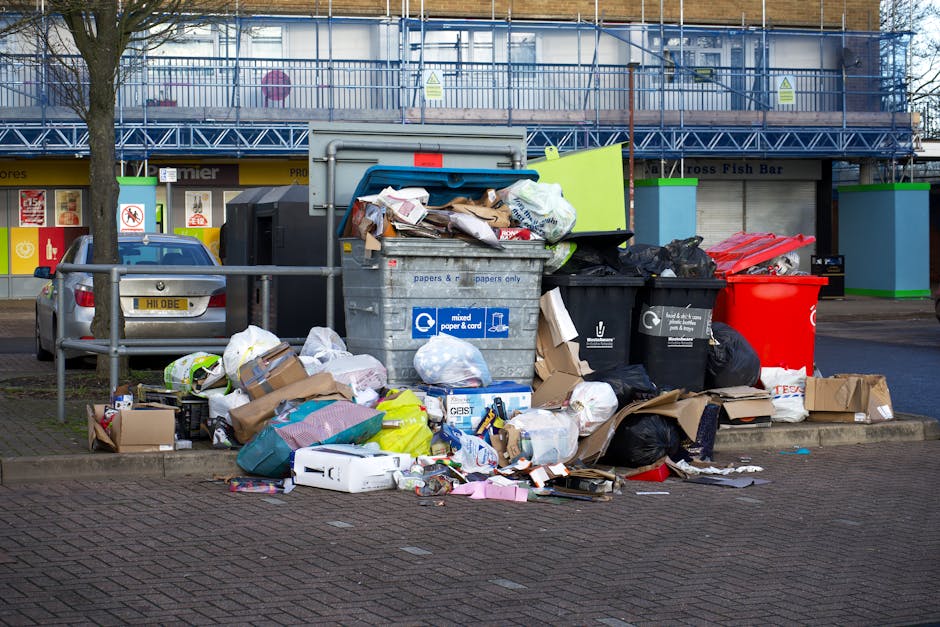
Limehouse Basin bulky waste collection and skip alternative: a practical local guide
If you are clearing a flat, refreshing furniture, or dealing with a pile of awkward items by the door, Limehouse Basin bulky waste collection and skip alternative services can save you a lot of hassle. Let's face it, not every job needs a skip sitting outside for days, and not every street or building makes skip hire practical anyway. In a place like Limehouse Basin, where access can be tight and space is precious, a fast, flexible bulky waste collection is often the smarter choice.
This guide explains how the process works, when it makes sense, what to avoid, and how to choose the right approach for your home, flat, office, or managed property. You will also find a straightforward comparison, a checklist, and practical tips that should make the whole thing feel far less annoying. Because rubbish removal should be simple. Really simple.
- Why this matters
- How it works
- Key benefits
- Who it is for
- Step-by-step guidance
- Expert tips
- Common mistakes
- Tools, resources and recommendations
- Law, compliance and best practice
- Options and comparison
- Real-world example
- Practical checklist
- Conclusion
- Frequently asked questions
Why Limehouse Basin bulky waste collection and skip alternative Matters
Bulky waste is exactly what it sounds like: items too large, awkward, or heavy for normal household bins. Think sofas, wardrobes, broken appliances, mattresses, tables, shelving, and mixed household clutter. In Limehouse Basin, the issue is not just what you are throwing away. It is how you get it out without causing disruption.
Skips can work well in the right setting. But in many local situations they are overkill. You may need a parking bay permit, a suitable place to drop the skip, and enough time to fill it safely. If your building has limited frontage, shared access, or nearby traffic, the whole job can become more stress than solution.
A skip alternative, by contrast, is usually much better for one-off clearances, mixed bulky items, and situations where speed matters. The team comes to the property, loads the waste, and removes it on the same visit or within a short window. For residents near the water, in managed blocks, or in narrow access streets, that can be a real relief.
There is also a practical sustainability angle. A good waste removal service does not just tip everything together and move on. Items can often be sorted for reuse, recycling, or disposal in the proper stream. If that matters to you, and it should, a well-run service is worth more than simply the cheapest option on paper. The cheap one can turn expensive later. Funny how that works.
If you want to understand what usually happens to mixed waste once it leaves your property, the broader approach is covered in waste removal and the company's recycling and sustainability information.
How Limehouse Basin bulky waste collection and skip alternative Works
The process is usually refreshingly straightforward. You describe what needs removing, share rough photos if possible, and receive a quote or estimate based on the volume, item type, access, and labour involved. That part alone is often the difference between a decent experience and a messy one.
On the day, the crew arrives, assesses access, and removes the items from inside the property, hallway, garage, loft, or outside collection point. That can include carrying items downstairs, navigating tight corners, and dealing with the odd stuck wardrobe that somehow looks larger on the stairs than it did in the room. You know the type.
For smaller jobs, collections can be quick. For larger clearances, you might need a short visit or staged removal. The key thing is that you are not responsible for loading a skip yourself, and you are not left with a metal box taking up road space for a week.
If the items include furniture, appliances, or specialist waste, it helps to separate them in advance where practical. That can speed things up and reduce costs. For example, old chairs and a sofa can usually be handled differently from a fridge or a leaking item. If you are disposing of a sofa or mattress, it is worth looking at mattress and sofa disposal. For larger household clearances, home clearance or flat clearance may be the more natural fit.
What a skip alternative usually includes
- Collection from inside or outside the property
- Lifting and carrying by the removal team
- Sorting for reuse or recycling where possible
- Responsible disposal of the remainder
- Advice on items that need separate handling
Key Benefits and Practical Advantages
The biggest advantage is convenience, but that is only the start. In a busy part of London, convenience often translates into less disruption, fewer access problems, and a better overall result. There is no need to manage a skip permit in many cases, and no need to guess whether the skip will be big enough.
Another major benefit is control. With skip hire, you need to estimate in advance how much waste you will generate. That is awkward when you are clearing a loft, a storage room, or a flat packed with mixed items. With bulky waste collection, you can show the team exactly what needs to go. Much less guesswork.
It also tends to be better for bulky furniture and awkward items. A sofa, a wardrobe, or a large appliance is not always easy to break down safely. A removal team with experience can handle these items properly and, when appropriate, direct them to the right disposal route. If you are dealing with white goods, the fridge and appliance removal page is useful for understanding that side of the job.
For local landlords, agents, or business owners, the speed factor matters too. Emptying a flat between tenancies or clearing an office after a move can not wait around for a complicated skip arrangement. In those scenarios, a punctual collection can save time and honestly, a fair bit of swearing under your breath.
Expert summary: if your job is bulky, time-sensitive, access-restricted, or mixed-material, a skip alternative is often the cleanest and least disruptive route. Skip hire still has a place, but it is not automatically the best answer.
Who This Is For and When It Makes Sense
This kind of service is a good fit for people who have items too large for bin collection but not enough waste to justify a full skip. That includes residents in flats, landlords between tenancies, families downsizing, and anyone whose house has quietly accumulated a small mountain in the garage or loft. It happens to the best of us.
It is especially useful if:
- you live in a flat with no safe skip space
- you have tight access or no driveway
- you want items removed from inside the property
- you are clearing one or two bulky items rather than a full renovation load
- you need the job done quickly
- you want sorting and disposal handled properly
It also makes sense for businesses and shared buildings. An office may need desk and chair removal; a shop may need old display units or packaging waste cleared; a landlord may need a full end-of-tenancy sweep. If that sounds familiar, office clearance and business waste removal are worth exploring.
Sometimes the best fit is a more specific service. A room full of old wardrobes? That leans towards furniture clearance or furniture disposal. A messy garage? garage clearance may be the neatest route. A loft filled with boxes, old toys, and forgotten luggage? You get the idea: loft clearance tends to be the right call.
Step-by-Step Guidance
If you have never booked a bulky waste pickup before, here is the simplest way to approach it.
- List everything you want removed. Be honest about the size and quantity. If that old wardrobe is coming apart, mention it. If there are stairs, mention those too.
- Separate special items. Appliances, mattresses, confidential paperwork, garden waste, and anything potentially hazardous may need different handling.
- Take a few clear photos. A wide shot plus close-ups usually helps more than a long explanation. A picture saves time. A blurry one, not so much.
- Ask about access. Narrow hallways, basement stairs, no lift, controlled entry, parking restrictions, and loading space all affect the job.
- Check what is included. Labour, lifting, disposal, recycling, and VAT or fees should be understood before the visit.
- Prepare the route. Move fragile items out of the way, unlock doors, and clear a path if you can.
- Walk through the load on arrival. Show the team exactly what is going. A five-minute walkthrough can prevent confusion later.
- Keep paperwork or receipts. Especially if you are a landlord, agent, or business needing records for waste management.
If you are still comparing whether to book collection or use a skip, check what can go in a skip. It helps clarify the boundary between the two options.
Expert Tips for Better Results
First, be specific. "A bit of furniture" and "three wardrobes, one broken sofa, and a dismantled table" are not the same thing. The more precise you are, the smoother the collection tends to be.
Second, think in terms of access, not just volume. A small pile in a top-floor flat with no lift can be more work than a larger pile at ground level. That is one reason quotes sometimes differ from what people expect. It is not arbitrary. It is the lifting and carrying that changes the job.
Third, group similar items together if you can. Putting mattresses, furniture, and mixed junk into rough categories makes loading easier and can support better recycling. It is a small effort, but it helps. Quite a lot, actually.
Fourth, ask about items that need separate treatment before collection day. Fridges, freezers, and certain electricals are not just "another bulky item". Likewise, anything labelled or suspected as hazardous should be handled carefully. If you are not sure, ask rather than guessing.
Fifth, if you are clearing a whole property, do not leave the awkward items for last. Those are usually the ones that cause delay. Better to identify them early and deal with them as part of the overall plan. If you are handling a move-out or inherited property, house clearance can be a more complete option.
Common Mistakes to Avoid
The most common mistake is underestimating the amount of waste. People do a quick visual sweep, think "that's not much", and then discover three extra bags, a broken desk, and an old freezer hiding behind a door. It is a classic.
Another mistake is assuming every item can go together. Not all bulky waste is treated the same way. Mixed loads are normal, but hazardous or specialist items need extra care. If in doubt, check before the team arrives. That avoids awkward surprises and possible refusal on the day.
People also forget about access. A collection booked for a tight Victorian-style stairwell, a narrow entrance, or a permit-controlled area needs more planning than a drive-up job. Forgetting this can mean delays, rescheduling, or extra labour.
Do not leave everything until the last minute either. If you are moving, refurbishing, or handing back keys, book early enough to avoid a rushed clear-out the night before. Nobody enjoys carrying a wardrobe downstairs at 8pm with a torch in one hand. Nobody.
Finally, do not choose based on headline price alone. A vague low quote can become expensive if labour, access, or disposal extras appear later. Clear pricing and clear terms matter. If you want to compare how quotes are usually handled, see pricing and quotes and terms and conditions.
Tools, Resources and Recommendations
You do not need many tools for a basic bulky waste clearance, but a little preparation helps.
- Phone camera: to document the items and send clear photos for a quote
- Sticky notes or labels: to mark what stays and what goes
- Basic screwdriver or Allen keys: useful if something can be safely dismantled first
- Gloves: for sorting or moving small pieces before collection
- Bin bags or boxes: for loose items, clothes, paperwork, and light clutter
For a broader property clear-out, it can help to combine services logically. Old furniture? Start with furniture disposal. A packed loft? Try loft clearance. General household clutter? home clearance may be better than piecing it together service by service.
If you need peace of mind around business processes, it is also worth reviewing insurance and safety, health and safety policy, and payment and security. Those pages help show how a provider thinks about risk and customer protection, not just collection speed.
Law, Compliance, Standards, or Best Practice
For bulky waste, the main principle is simple: waste should be handled and disposed of responsibly, and the person producing the waste has a duty to make sure it goes to a legitimate operator. In everyday terms, that means you should use a provider that can explain where the waste goes and how mixed items are managed.
There are also practical compliance issues around hazardous materials, electricals, fridges, and confidential items. Some items need specialist handling, and mixing them with general bulky waste is not best practice. It can create safety issues and make recycling harder.
For offices or commercial premises, the expectation is usually even higher. Records, separation of waste streams, and controlled disposal all matter. If you are dealing with paperwork or storage purge items, confidential shredding may be relevant as part of the wider clearance.
Best practice also means clear communication. You should know what is included in the service, what is excluded, whether there are access conditions, and how special items are treated. That is not being fussy. It is sensible.
And yes, if a provider cannot explain this in plain English, that is a small warning sign right there.
Options, Methods, or Comparison Table
Here is a practical comparison of the most common ways to deal with bulky waste in Limehouse Basin and similar London settings.
| Option | Best for | Advantages | Drawbacks |
|---|---|---|---|
| Bulky waste collection | Large single items or mixed loads with awkward access | Fast, minimal disruption, items removed for you | Usually priced by volume, labour, and access |
| Skip hire | Ongoing clear-outs, DIY waste, heavier renovation debris | Flexible loading over time, useful for repeated disposal | Needs space, can require permits, you load it yourself |
| Specialist furniture clearance | Sofas, wardrobes, beds, mixed furniture | Good for bulky household items, often efficient on-site | May not suit all waste types |
| Full property clearance | End-of-tenancy, probate, downsizing, hoarder-type clear-outs | Most complete solution, less coordination for you | More involved and usually broader in scope |
The right choice depends on your space, timing, and the type of waste. If you need more certainty about skip contents, the what can go in a skip guide is a sensible benchmark. If your waste is mostly mixed household items and you want them gone quickly, collection is often easier.
Case Study or Real-World Example
Imagine a two-bed flat near Limehouse Basin where the tenants have moved out and left behind a broken bed frame, a tired sofa, a wardrobe, two office chairs, and a couple of sacks of mixed clutter. The building has a shared entrance, a small lift, and limited waiting space outside. A skip would be possible in theory, but it would be awkward, possibly noisy, and inconvenient for neighbours.
In that situation, a bulky waste collection is usually the cleaner solution. The items can be assessed in advance, the crew can plan the lift route, and the removal can happen in one visit. The hallway is cleared, the lift is protected, and there is no skip blocking access for days. Simple, and a bit less stressful for everyone involved.
If the flat also had old paperwork and storage boxes, the job might combine flat clearance with confidential shredding. If there were construction leftovers from a light refurb, then builders waste clearance could be added into the mix. That flexibility is one of the main reasons people choose a skip alternative in the first place.
Truth be told, most people only discover how useful it is after the first proper clearance. Then they wonder why they ever considered wrestling with a skip in the first place.
Practical Checklist
Before booking, run through this quick checklist. It saves time and keeps things calm.
- List every bulky item you want removed
- Check whether any items are hazardous, electrical, or specialist
- Take photos of the waste and the access route
- Measure awkward items if they may need dismantling
- Confirm whether the collection is from inside or outside
- Check for stairs, lifts, parking issues, or narrow access
- Ask about recycling, reuse, and disposal handling
- Review the quote and any exclusions
- Prepare the area so the team can work safely
- Keep any documents or proof of collection you might need later
If you are arranging a larger domestic clear-out, you may also want to look at garage clearance and house clearance depending on where the clutter has built up. It spreads the load, so to speak.
Key takeaway: the best bulky waste solution is the one that fits your access, timeline, and item type. Don't just ask "how much?" Ask "how will this actually work on the day?" That one question tends to save a lot of bother.
Conclusion
Limehouse Basin bulky waste collection and skip alternative services are at their best when you need speed, flexibility, and a tidy result without the hassle of managing a skip. For flats, managed buildings, mixed household items, and awkward access, they are often the better practical choice. For bigger or slower clear-outs, skip hire can still be useful, but it is not the default answer for every job.
The trick is to match the method to the mess. Be clear about the items, honest about access, and realistic about timing. Do that, and the whole process becomes much smoother than most people expect. A little planning goes a long way, really it does.
If you are ready to move forward, start by comparing your options, checking what needs specialist handling, and reviewing the service details that matter most to you. A good clearance is one that feels easy at the point you book it and even easier once the last item is gone.
Get a free quote today and see how much you can save.
And when that clutter is finally out of sight, the room feels bigger, the air feels lighter, and the day just improves a little. That part never gets old.
Frequently Asked Questions
What is the best skip alternative for bulky waste in Limehouse Basin?
The best option is usually a bulky waste collection or full clearance service that removes items from inside or outside your property. It is particularly useful when access is tight, you only have a few large items, or you want the waste gone quickly.
Is bulky waste collection cheaper than skip hire?
It can be, but not always. For smaller loads or awkward access, collection is often better value because you avoid skip space, permit issues, and loading the waste yourself. For larger DIY or renovation jobs, a skip may still suit better.
Do I need to put the waste outside before collection?
Not necessarily. Many bulky waste services will collect from inside the property, which is a major advantage over a skip. Always confirm this before booking, especially if you live in a flat or upper-floor home.
Can a skip alternative handle furniture and appliances together?
Yes, often it can. Furniture, mattresses, and appliances are common bulky waste items. Some items, such as fridges or freezers, may need separate treatment, so it is best to mention them early.
What if my building has no lift or difficult stairs?
That is exactly where a skip alternative can be helpful, because the crew does the carrying. Tell them about stairs, tight turns, or restricted access when you ask for a quote so they can plan properly.
Can I use bulky waste collection for a whole flat clearance?
Yes. If you are clearing out most or all of a flat, a full flat clearance is often the more efficient option. It is better suited to mixed items, end-of-tenancy clear-outs, and larger jobs.
What items should not go with general bulky waste?
Hazardous waste, some electrical items, chemicals, and anything requiring specialist disposal should be discussed separately. If you are unsure, ask first rather than mixing it in with general waste.
How far in advance should I book?
For a simple job, you may not need much lead time. But if you have a deadline, such as moving out or handing back keys, it is wise to book as early as you can. A bit of planning saves a lot of last-minute panic.
Will my waste be recycled?
That depends on the type of waste and the provider's sorting process. Reuse and recycling are often possible for certain items, and a responsible service should be able to explain how waste is handled.
Is bulky waste collection suitable for businesses?
Yes. Offices, shops, landlords, and property managers often use this type of service for desks, chairs, mixed office waste, and clearance jobs. If that sounds like your situation, business waste removal and office clearance may be helpful.
Do I need a permit for a skip alternative?
Usually not, because there is no skip sitting on the road. That is one of the most practical benefits in busier London locations, especially where parking and kerb space are limited.
What is the main mistake people make when comparing options?
They compare only the headline price and ignore access, lifting, time, and special-item handling. The cheapest looking option is not always the best value once the real job is considered.